It’s hard to believe it’s been six years since we finished We Are Poppy. When we wrote our last post here, we were in the middle of a pandemic, our workshops had moved online and our planned trips to museums and archives had been shelved. Less than two weeks later, Dear Poppy went out on BBC Radio Sussex and BBC Radio Surrey on Remembrance Sunday.
A lot has changed since then, but this website is still here, and I’m still so proud of it. The students who worked on this project were remarkable. They researched, interviewed, recorded, wrote and presented, all remotely, and all during an incredibly uncertain time. I can’t tell you how proud I am of them.
Every Remembrance Day, I find myself thinking about the women who are so often forgotten. I think of Mabel Lethbridge, just 17 when she lost her leg in an explosion at a munitions factory. I think of the nurses who saw terrible things and were simply sent home when it all became too much. I think of Katie Morter, who lost her husband while she was pregnant with their first child. And I think of the thousands of women who wrote to the government in 1920, each convinced that the Unknown Warrior was her son. We were all so touched when we heard this story from historian Lucy Noakes.
I also wonder how my family was affected. Not long ago, I came across a photo of my great great aunt Mary Saddler and four others in what looks like munitions uniform. She’s smiling for the photograph but it must have been a frightening time.
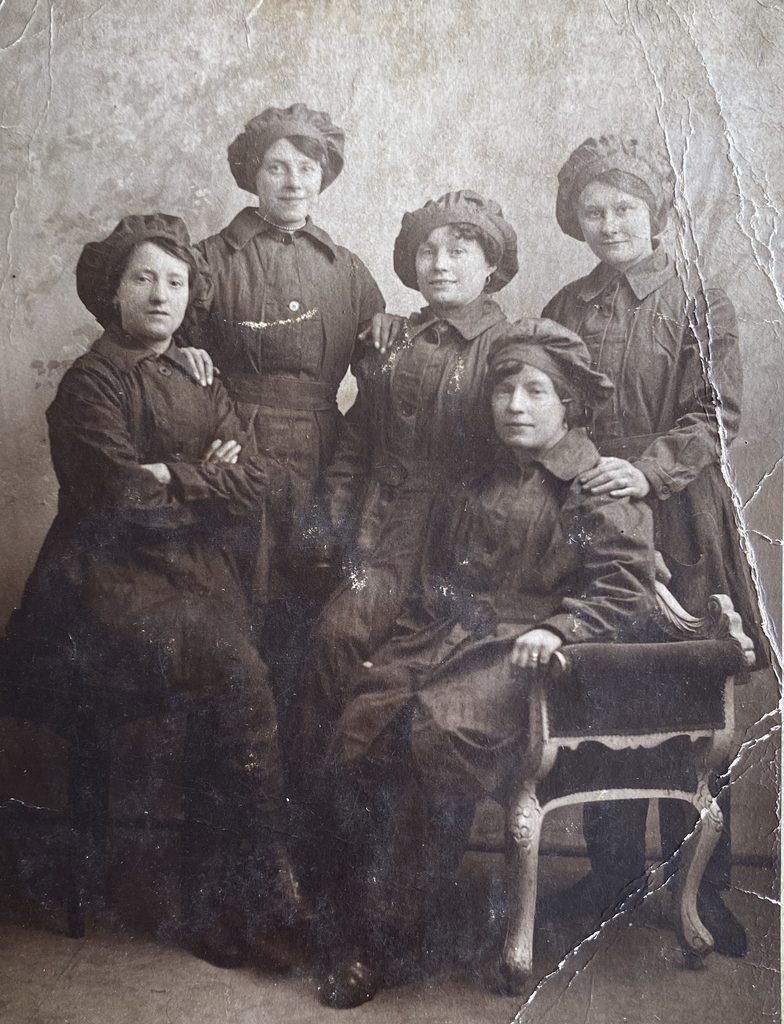
My great, great aunt Mary, standing on the left, with colleagues. From their uniform, I wonder if she was a munitions worker? After my grandmother died, I’ve no one to ask.
As Amelie and Daisy, both 14 at the time, wrote for this project, nobody seemed to remember that women had been affected too. That’s why it matters that we keep telling these stories. Remembering the women who lived through the war doesn’t take anything away from the men who fought and died. It simply gives us a fuller picture of what war does to people, and of what it costs those who are left to carry on.
So this Remembrance, I hope you’ll take a moment to remember them too. You can listen to Dear Poppy, read their stories or use our Schools Pack with your own students.
As for Make (Good) Trouble, we’re still doing what we did on this project: working alongside young people and helping them tell their own stories. Recently, that has meant training films for future NHS therapists, school mental health films and podcasts made by work experience students at Wakehurst.
Every project is different, but the thing that made We Are Poppy so special hasn’t changed. When you give young people the microphone, they make work that adults simply couldn’t make on their own.
If you’d like to create something with the young people you work with, have a look at our creative workshops or get in touch. We’d love to hear from you.
And thank you to everyone who made We Are Poppy happen, and to all of you who are still finding it six years on.